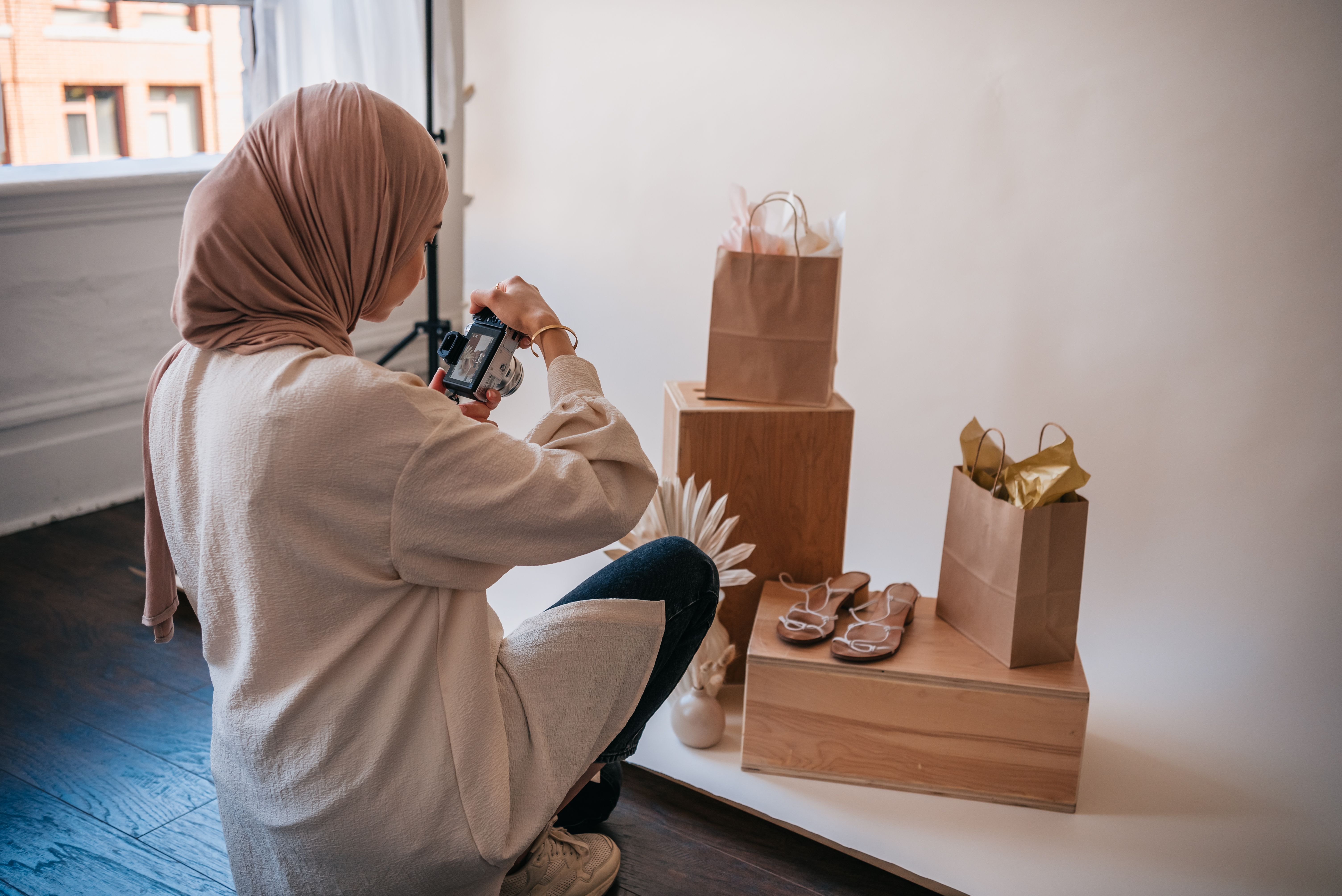

I run a small DTC skincare line. Just me and one part time contractor handling fulfillment. When I launched in early 2025 I knew the visuals had to look legit because in skincare, if your product photos look cheap, people assume the product is cheap. So I hired a local photographer, rented a studio for half a day, booked two models through a casting platform, bought props and backdrops, and paid for retouching. Total came out to about $4,200 for what ended up being maybe 30 usable images.
Those photos carried me for about five months. Then I launched two new SKUs and needed fresh content for a slightly different target demographic. I also wanted lifestyle shots that felt more diverse because I was starting to get traction with customers in Southeast Asia and wanted the visuals to reflect that. The photographer quoted me $3,800 for the second round because now I needed a different model and a different vibe. I just couldn’t justify it. My entire monthly marketing budget at the time was around $2,000.
So I started exploring AI generated imagery. Not because I thought it would replace real photography, but because I literally could not afford another shoot and I needed content to keep the brand looking alive on social and on the product pages. And before I get into the tools and what happened, I want to flag the thing that’s been eating at me the most, because I think it’s actually the more interesting branding conversation here.
I don’t disclose anywhere on my site that the lifestyle imagery features AI generated people. Part of me feels like it’s no different from stock photography, which nobody discloses either. I’ve bought stock photos from Shutterstock for years and never once put a disclaimer saying “this isn’t a real customer.” But something about AI generated faces feels different and I can’t fully articulate why. Maybe it’s because the technology is new and there’s a cultural expectation of transparency around it that doesn’t exist for stock photos yet. Or maybe I’m overthinking it and in two years nobody will care. I genuinely don’t know, and it nags at me every time I look at my own website.
Anyway, here’s what the actual process looked like. Midjourney was my first stop and it’s fantastic for mood boards and abstract brand visuals, but I ran into a wall pretty quickly. Every time I tried to generate the same person in a different setting, I got a completely different face. Slightly different bone structure, different eye shape, hair that didn’t quite match. Which is fine for one off social posts but completely useless if you want a recognizable character across your website and marketing materials. Visual consistency is kind of the whole point of brand guidelines and Midjourney just wasn’t built for that use case.
I spent a few weeks after that trying different platforms that specifically advertise character consistency, meaning you can supposedly keep the same face across different scenes and outfits. I messed around with Leonardo, Flux, APOB, and a couple of smaller ones I found through Reddit threads actually. The results were all over the place. Leonardo gave me decent image quality but the face drifted noticeably when I changed the angle or lighting too much. Flux was powerful but had a steeper learning curve than I wanted to deal with while also running a business. APOB kept the face more stable across scenes but a lot of the outputs had this waxy, overly smooth skin texture that I had to throw out. Every tool had its own flavor of frustrating.
I probably spent 8 or 10 hours across two weekends just generating and sorting through outputs. There’s this weird emotional cycle where you get excited because one image looks great, then the next five are garbage, then you get one that’s almost perfect but the hands look wrong or the lighting doesn’t match your brand palette. It’s tedious in a way that’s completely different from coordinating a real shoot but still very much work. Out of maybe 50 total generations across all the platforms, I ended up with around 15 images I actually felt comfortable putting on the website. The rest looked too artificial or just didn’t match the brand aesthetic I was going for.
But the economics are what kept me going despite the frustrations. Most of these tools have free tiers or trial credits that let you experiment without spending anything upfront. So even with a lousy hit rate, I got 15 usable images for zero dollars and two weekends of my time. Still way cheaper than another $3,800 shoot.
I also tried using some of the AI generated images for Instagram stories and a couple of low budget Meta ads. I was only spending maybe $150 over a week so this is far from scientific, but the engagement and click throughs were roughly in the same ballpark as the stories I’d made with the professional photography. The one place I noticed a difference was product detail pages on my actual site. The professional photos still felt more trustworthy there, maybe because people are scrutinizing more closely when they’re about to spend money. So I kept the pro shots for the key product pages and used the AI lifestyle imagery more for social and top of funnel content where people scroll past in two seconds anyway.
The creative direction piece is also worth mentioning. These tools don’t replace having a visual eye. I spent real time thinking about scene composition, what the lighting should feel like, what kind of environment matched my brand’s aesthetic. It’s more like directing a shoot through text prompts instead of talking to a photographer. If you don’t have a sense of what you want, the output reflects that. Garbage in, garbage out, same as any creative tool.
And honestly, for some use cases I still think real photography is irreplaceable. I shot my actual product flatlays myself with a $60 lightbox because I needed the real product in the frame. The AI imagery was specifically for lifestyle and model shots where the person in the image is more of a brand vehicle than a documentary subject.
I ended up with a hybrid approach. Real product photography that I shoot myself on the cheap, AI generated lifestyle imagery for the aspirational brand world around the products, and I save professional shoots for maybe once or twice a year when I have a major launch that justifies the spend. It’s not elegant but it’s kept the brand looking professional enough to convert while keeping me solvent.
The broader question I keep coming back to is whether the branding industry is going to develop real norms around disclosure before consumers start feeling burned by this. Right now it feels like the wild west. Brands are quietly using AI generated visuals everywhere and nobody is talking about it openly. That silence probably isn’t sustainable, and honestly the brands that figure out a thoughtful disclosure approach first might end up turning it into a genuine trust advantage.